Best Time to Go on Safari in Tanzania
Last reviewed 13 September 2026. All season dates below are long-run averages. Onset and withdrawal shift by weeks from year to year, and have become less predictable.
When is the best time to go on safari in Tanzania?
For general game viewing across the northern circuit — Serengeti, Ngorongoro, Tarangire — and the southern and western parks, the answer is June to October. This is the long dry season: grass is short or trampled, standing water has gone, and animals are forced onto permanent rivers, springs and swamps. Visibility is at its best and sightings are at their most reliable.
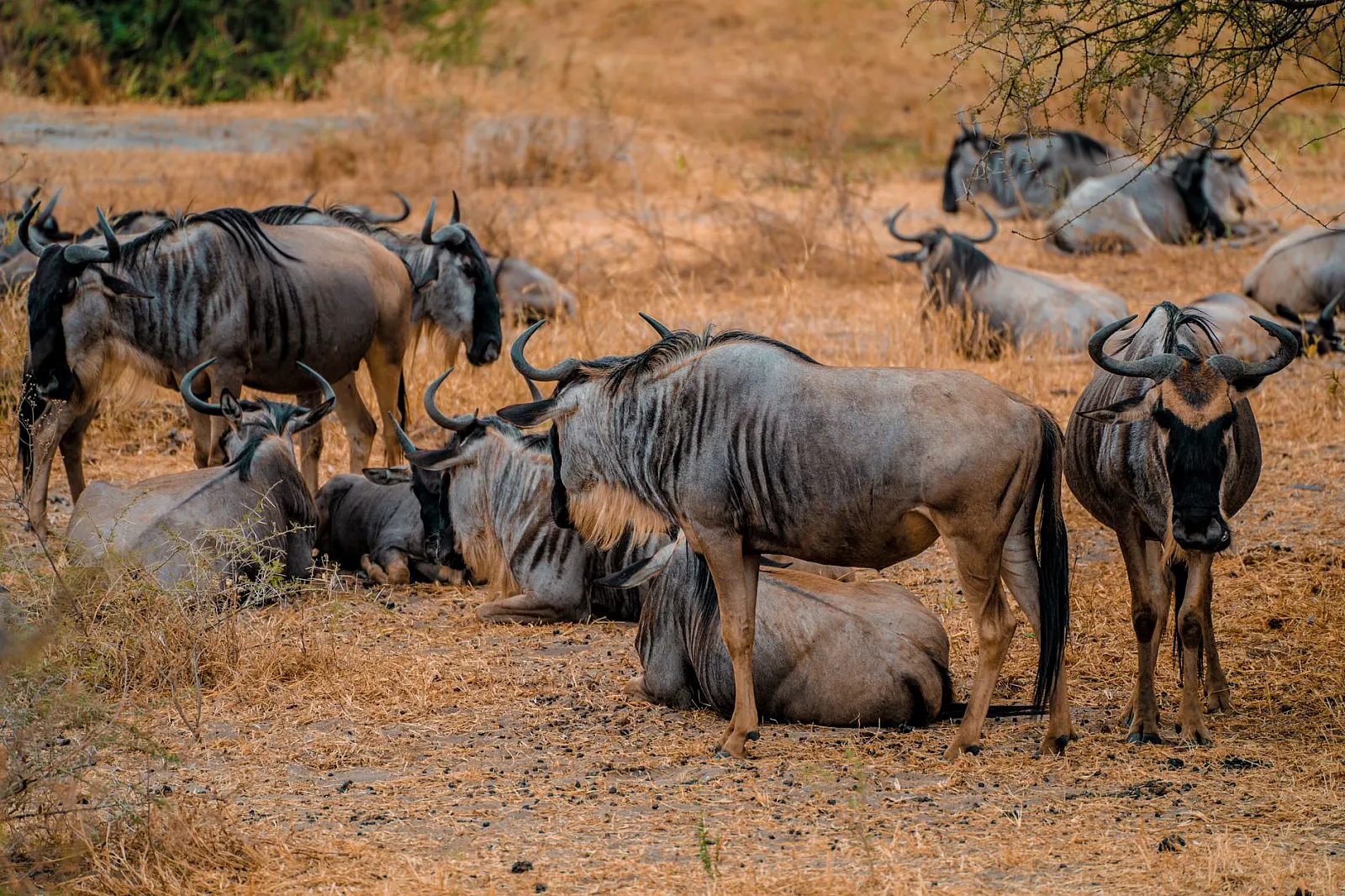
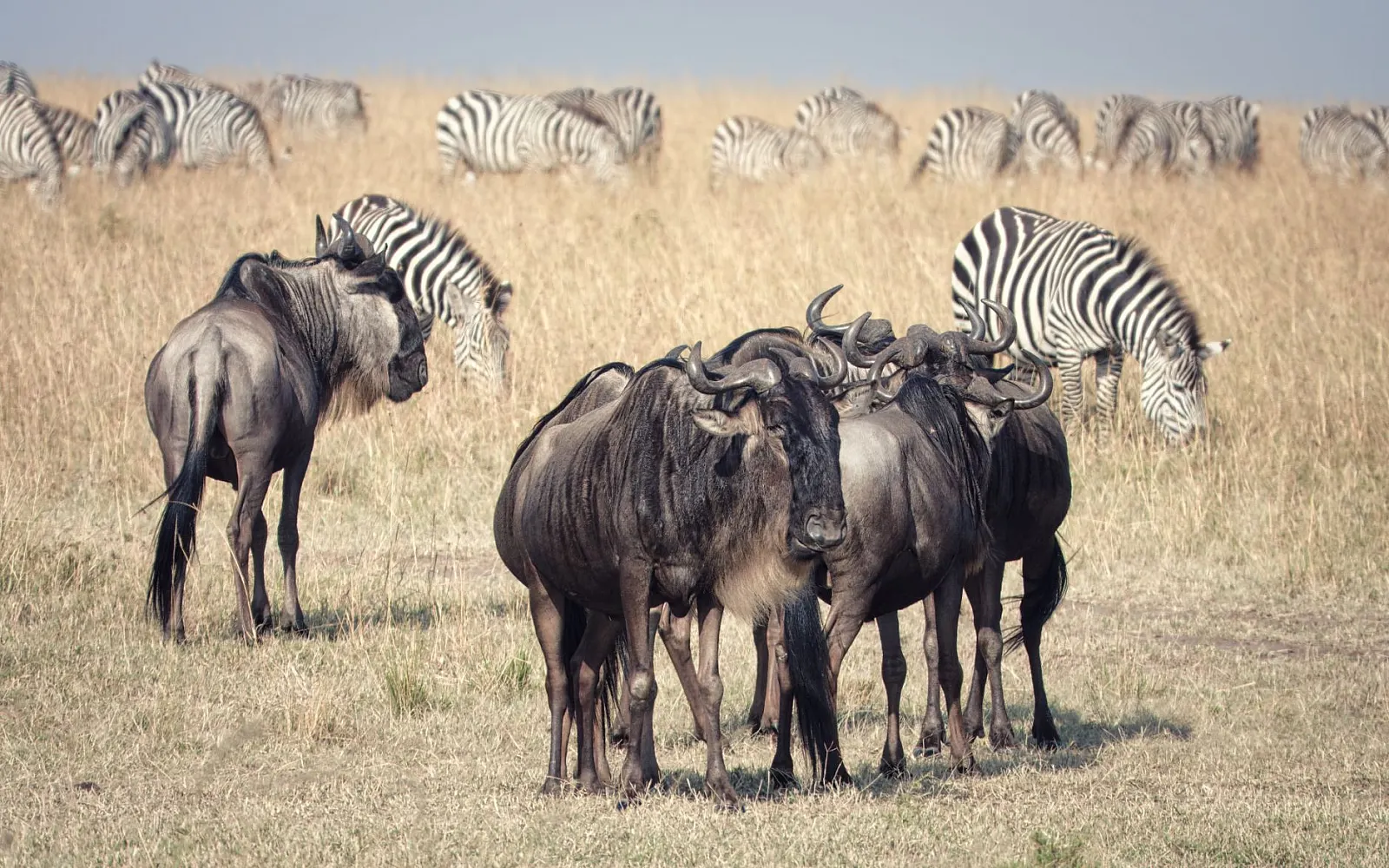
The competing answer is late January to February, when roughly half a million wildebeest calves are dropped on the short-grass plains of the southern Serengeti and Ndutu. Predator activity is intense and concentrated. This happens during a brief drier spell between Tanzania's two northern rainy seasons, so the plains are usually driveable — but it is not a guarantee.
What are Tanzania's seasons?
Tanzania does not have one rainfall pattern — it has two, and this is the single most-missed point on competing pages. FEWS NET's seasonal monitoring for Tanzania distinguishes them clearly:
- Bimodal north and east (Serengeti, Ngorongoro, Tarangire, Arusha, Kilimanjaro, the coast): the masika long rains, roughly mid-March to May, and the vuli short rains, roughly November to December or mid-January, with drier gaps in between.
- Unimodal south, west and centre (Nyerere/Selous, Ruaha, Katavi, Mahale): a single msimu wet season running roughly November or December through April, then a long unbroken dry season from May to October.
That means a February trip is excellent in the northern Serengeti circuit and poor in Ruaha — the same month, opposite advice. Interannual variability in the short rains is strongly influenced by ENSO and the Indian Ocean Dipole, which is why vuli can fail entirely in some years and flood in others (ScienceDirect, 2025). Consult the Tanzania Meteorological Authority for current-season forecasts rather than assuming the averages.
What does each season actually mean for game viewing?
Dry season (June–October). Seasonal pans dry out and game concentrates on the Seronera and Grumeti rivers, the Tarangire River, the Great Ruaha and the Rufiji. Grass is low, so predators are visible at distance. Black-cotton soil tracks are firm, so remote areas open up. The downside is dust, cold mornings in June and July, and crowding at the well-known sightings.
Green season (November–April). Game disperses because water is everywhere. Grass in Tarangire and the western Serengeti grows tall enough to hide a lion. Some black-cotton tracks become impassable, and river crossings on remote routes can close. In exchange: dramatic light, newborn antelope, very low rates, and few vehicles.
Shoulder (late May, early November). Genuinely good value — the bush has greened but the ground has firmed, or vice versa. Riskier, and some camps are still closed.
Tanzania safari month by month
| Month | Season | Game viewing | Crowds & price | Notable |
|---|---|---|---|---|
| January | Drier gap (north); wet (south/west) | Very good on southern Serengeti plains | High to ~10 Jan, then eases | Calving begins around Ndutu |
| February | Drier gap; wet south | Peak calving, heavy predator action | High | Usually the driest northern month |
| March | Long rains begin | Declining; grass growing | Falling sharply | Herds start moving north-west |
| April | Long rains (masika) peak | Weakest of the year | Lowest; many southern camps shut | Wettest month in much of the north |
| May | Long rains tailing off | Improving late in month | Low | Camps reopening; green and empty |
| June | Dry season starts | Good and improving weekly | Rising | Grumeti-area herds may build |
| July | Dry, cool | Very good | High | Mara River crossings typically begin |
| August | Dry, cool | Very good | Peak | Northern Serengeti crossings |
| September | Dry, warming | Excellent; southern circuit at its best | Peak | Ruaha and Nyerere peak |
| October | Dry, hot | Excellent; water most concentrated | High, easing late | Herds begin drifting south |
| November | Short rains (vuli) | Mixed; bush greens within days | Low | Palearctic migrant birds arrive |
| December | Short rains easing | Good; excellent light | Low, then sharp peak from ~20 Dec | Herds back on southern plains |
Where is the wildebeest migration each month?
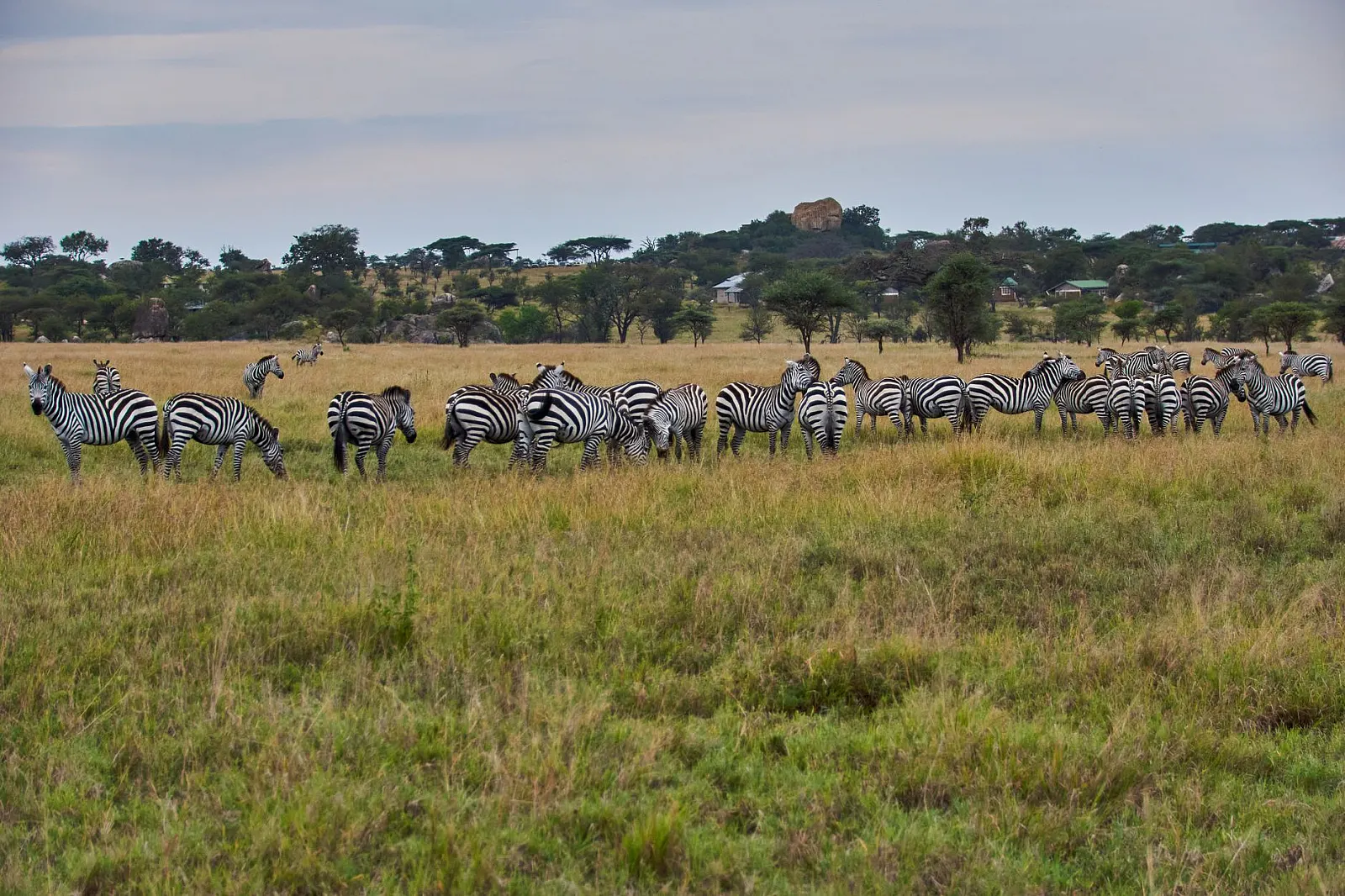
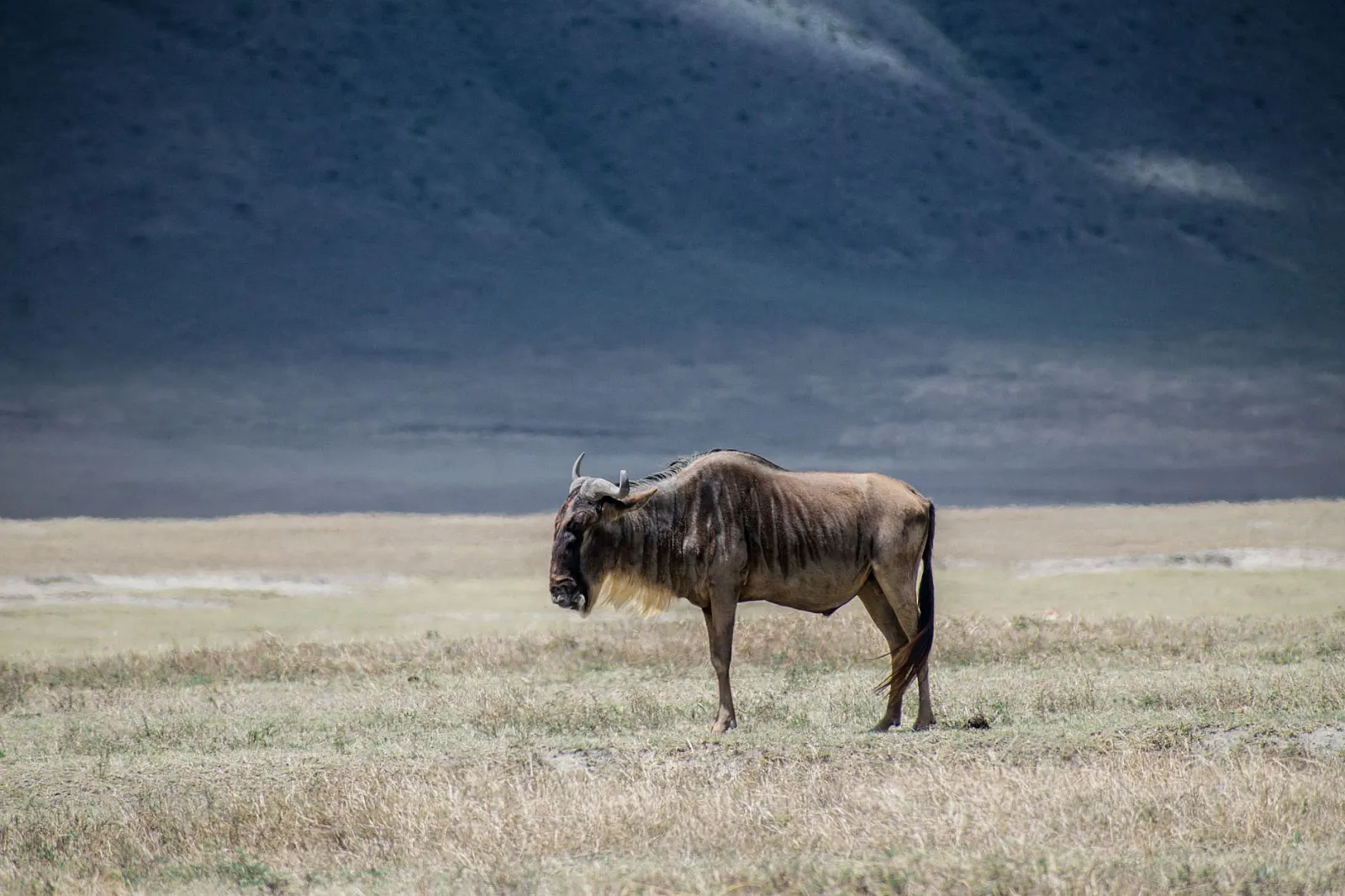
The broad annual circuit is consistent: southern short-grass plains January–March, north-west through the Grumeti in May–June, northern Serengeti and Mara River crossings July–October, returning south November–December. The exact timing is not predictable. The herds follow rainfall-driven grass green-up, so an early or failed rain shifts them by weeks, and in unusual years they deviate from the modal route entirely. No operator can promise you a river crossing on a given date; treat any page that implies otherwise with suspicion. See TANAPA's Serengeti page for park-authority information.
When is the best time for birding in Tanzania?
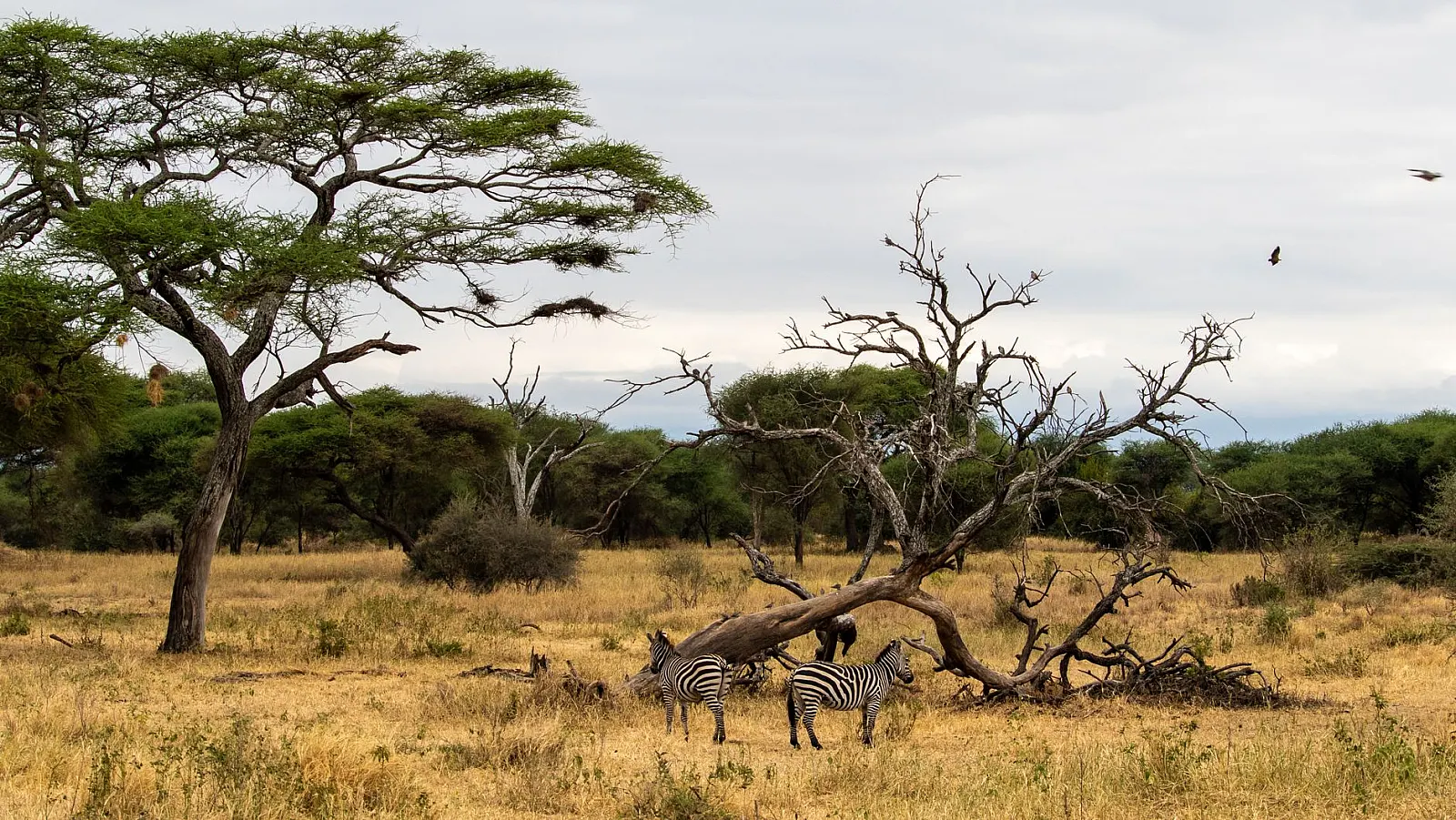
Birding and big-game seasons are opposed. The best birding is November to April, when Palearctic and intra-African migrants are present, resident species are in breeding plumage, and the Rift Valley soda lakes and Nyerere's lagoons fill. That is precisely when general game viewing is weakest. A November or early December trip is the usual compromise: migrants have arrived, but the bush has not yet closed in.
When should you NOT go on safari in Tanzania?
Most sites will not say this plainly, so: April is the worst month for a first-time, general-purpose Tanzania safari, with late March and much of May close behind. In the north the long rains are at their heaviest; in the south and west, camps in Ruaha, Nyerere, Katavi and Mahale routinely close from around March or April into May because access roads and airstrips are unusable. Tracks become mud, grass is at maximum height, and you may lose game drives entirely to weather.
Two qualified exceptions. If you want low prices, solitude, lush landscapes and birds — and you accept you may see less — April and May deliver those honestly. And if you are climbing Kilimanjaro rather than on safari, the same logic applies in reverse: the settled windows of January to mid-March and June to October are the ones to aim for.
The other underrated caution is late December. Game viewing is decent, but rates jump to peak levels and the best camps fill months ahead — you pay high-season prices for shoulder-season conditions.